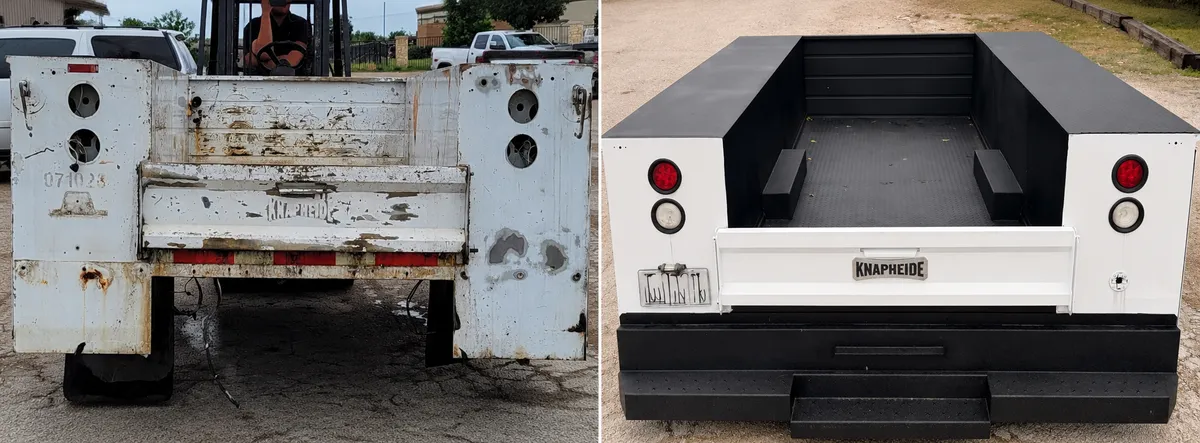
Repair, Refurbish, or Replace? Making the Right Decision for Damaged Truck Equipment
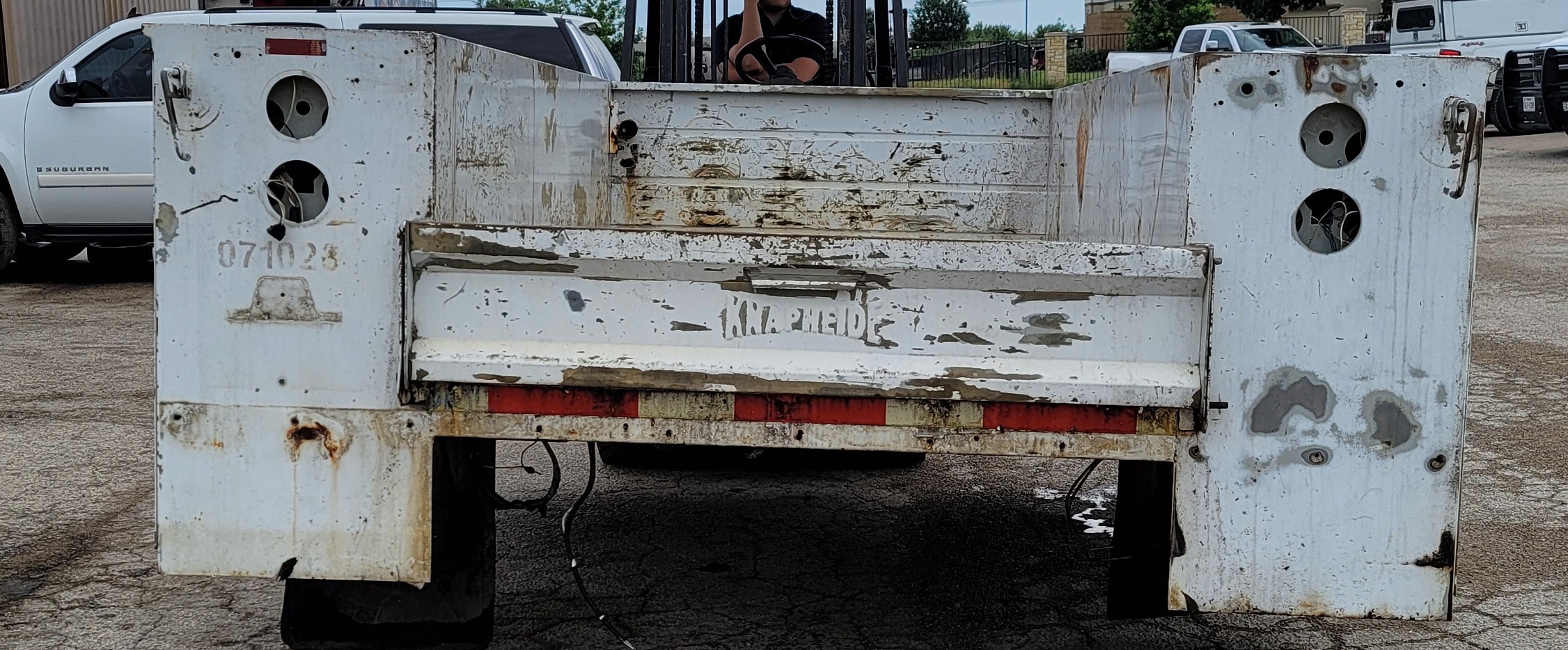
When a flatbed, service body, liftgate, trailer, or other piece of work-truck equipment becomes damaged, the first question is usually simple:
Can it be fixed, or does it need to be replaced?
The answer is not always obvious.
Minor-looking damage can sometimes hide a larger structural problem. At the same time, equipment that looks old and worn may still have years of useful service life remaining after the correct repairs and refurbishment.
The best decision depends on more than appearance. Safety, structural condition, repair history, downtime, cost, availability, and the equipment’s future purpose should all be considered before work begins.
What Is the Difference Between Repairing, Refurbishing, and Replacing?
These terms are sometimes used interchangeably, but they describe different levels of work.
Repair
A repair addresses a specific problem so the equipment can function correctly again.
Examples may include:
Repairing a damaged compartment door
Replacing hinges, latches, locks, or gas struts
Correcting a cracked weld
Repairing a section of damaged flooring
Fixing lights or electrical connections
Repairing a trailer component
Correcting a liftgate problem
Replacing damaged hardware
Repair may be the correct choice when the damage is isolated and the rest of the equipment remains in dependable condition.
Refurbishment
Refurbishment is more extensive. Instead of correcting only one problem, the equipment is evaluated and restored across multiple areas.
Depending on its condition, refurbishment may involve:
Removing rust and deteriorated coatings
Repairing damaged metal
Correcting doors and compartments
Replacing worn hardware
Completing necessary welding
Preparing and refinishing surfaces
Applying new paint or protective coating
Repairing lights and wiring
Adding or replacing accessories
Preparing the equipment for installation or continued service
Refurbishment may be appropriate when the main structure remains usable but the equipment has accumulated wear, corrosion, cosmetic damage, or several smaller problems.
Replacement
Replacement means removing the existing equipment and installing a different unit.
This may be a new product or a better-condition used unit. Replacement becomes more practical when the existing equipment is unsafe, structurally compromised, repeatedly failing, or no longer suitable for the work being performed.
Begin With Structural Condition
The main structure should carry the most weight in the decision.
Paint, lights, doors, seals, and hardware can often be replaced or restored. A severely weakened structure is a different matter.
Important areas to inspect include:
Main rails and crossmembers
Mounting points and brackets
Welded joints
Load-bearing sections
Floors and corners
Wheel-opening areas
Hitch and rear-bumper mounting areas
Crane, liftgate, or equipment-mounting locations
Areas affected by significant corrosion
If the damage is limited and the surrounding metal remains strong, repair may be reasonable. If corrosion or cracking has spread through several load-bearing sections, replacement may provide better long-term value.
Covering structural damage with filler, plates, or paint does not restore the equipment’s original strength. The cause and extent of the damage must be addressed.
Determine Whether the Damage Is Isolated or Widespread
One damaged door is different from six damaged compartments.
A small crack in an accessible location is different from repeated cracking across several mounting points. A patch of surface rust is different from corrosion throughout the floor, supports, and lower compartments.
Ask the following questions:
Is the problem limited to one area?
Are nearby components also beginning to fail?
Has the same area been repaired before?
Is there evidence of shifting, twisting, or overloading?
Has water entered multiple compartments?
Are several pieces of hardware worn out?
Is corrosion visible in areas that cannot be easily repaired?
The more widespread the damage becomes, the less practical a basic repair may be.
Consider Why the Damage Happened
Fixing the visible damage is only part of the job. It is also important to understand what caused it.
Truck equipment may be damaged by:
Overloading
Improper mounting
Accidents or impacts
Road vibration
Water intrusion
Exposure to chemicals or road salt
Normal wear over many years
Incorrect use of a liftgate, hitch, crane, or other accessory
Carrying equipment without proper support
Previous repairs that did not address the original problem
If the cause is not corrected, the same failure may return after the repair.
For example, repairing a cracked mounting area without correcting improper support could lead to another crack. Replacing damaged compartment hardware without fixing door alignment may cause the new components to wear prematurely.
Compare the Full Cost—not Just the First Estimate
A repair usually has a lower starting price than replacement, but the lowest initial cost is not always the best financial decision.
When comparing options, consider:
Immediate labor and material costs
Additional damage that may be discovered
Transportation and removal costs
Installation requirements
Replacement hardware or wiring
Refinishing and protective coating
Expected remaining service life
Future maintenance
Equipment availability
Time the truck will remain out of service
The likelihood of repeated repairs
A lower-cost repair may make sense if it restores dependable operation for several more years. It may not make sense if another major section is likely to fail shortly afterward.
The goal is to avoid paying repeatedly for equipment that is no longer dependable.
Account for Downtime
For a work truck, repair cost is only one part of the expense. The vehicle may also be unavailable while the equipment is inspected, repaired, refinished, replaced, or reinstalled.
Downtime can affect:
Scheduled projects
Crew assignments
Customer response times
Deliveries
Service calls
Revenue
Other vehicles that must absorb the workload
A more extensive refurbishment might keep the truck out of service longer initially, but it could reduce repeated interruptions later. Replacement may be faster in some situations, but only if a compatible unit is available and ready for installation.
The right choice depends on both the equipment and the operation relying on it.
Decide Whether the Equipment Still Fits the Work
Even perfectly repaired equipment may be the wrong equipment for the job.
A company’s needs can change. Crews may carry different tools, accept larger projects, add new services, or require equipment that was not part of the original setup.
Before investing in repairs, ask:
Does the current layout still support the crew?
Is there enough secure storage?
Is the load space being used effectively?
Does the equipment have the necessary capacity?
Are tools and materials easy to access?
Will new accessories need to be added soon?
Would a different flatbed or service body better support future work?
If the current equipment no longer serves the business, replacement or a redesigned setup may deliver more value than restoring the existing configuration.
When Repair May Make Sense
Repair may be the best option when:
The damage is limited to one or a few areas
The primary structure remains solid
Replacement parts or materials are available
The equipment still fits the vehicle and the work
There is no pattern of repeated failures
The repair can restore dependable operation
The expected remaining service life justifies the cost
When Refurbishment May Make Sense
Refurbishment may be worth considering when:
The main structure is still usable
Several repairable issues exist
The equipment has surface rust or worn coatings
Doors, compartments, hardware, or wiring require attention
The layout still works for the crew
A complete replacement would cost significantly more
Restoring the equipment could extend its useful life
When Replacement May Be the Better Decision
Replacement may be more practical when:
Structural damage is widespread
Critical mounting areas are severely weakened
Corrosion has affected multiple load-bearing sections
The same problems continue to return
Repairs would approach the cost of better equipment
The current setup no longer supports the work
Parts are unavailable or difficult to source
Continued use could create safety or reliability concerns
Avoid Making the Decision From Pictures Alone
Photographs are useful for identifying visible problems, but they rarely show the complete condition of truck equipment.
Damage underneath a body, behind compartments, around mounting points, or inside structural members may not appear in a photograph. Measurements and compatibility also need to be confirmed before replacing one body with another.
An in-person evaluation provides a clearer understanding of what can be repaired, what should be refurbished, and when replacement is the more responsible option.
Make the Decision Based on Future Value
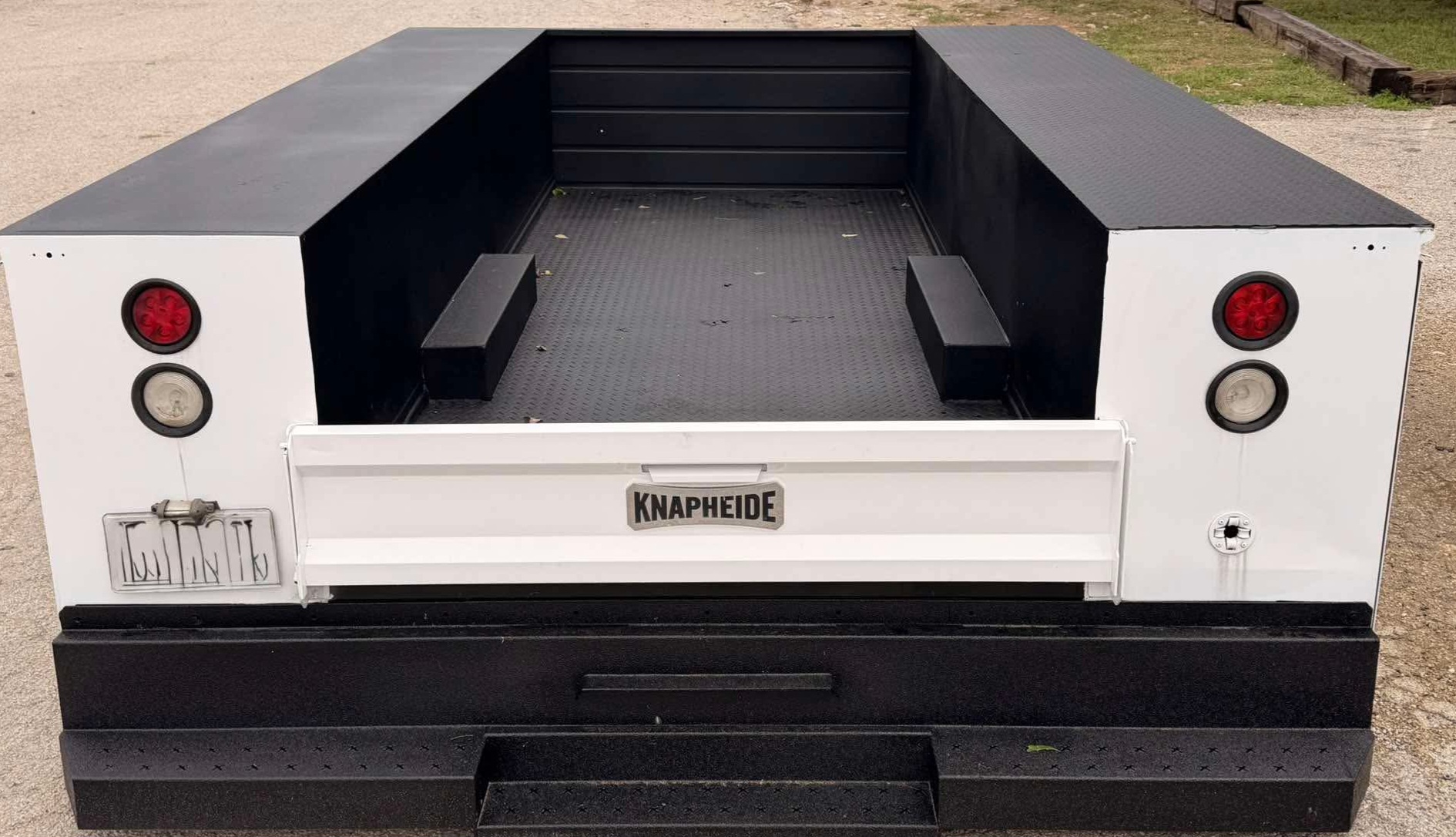
The question is not simply, “What is the cheapest way to get this equipment working again?”
A better question is:
“Which option will provide the safest, most dependable value for the work this truck needs to perform?”
Longhorn Upfitters helps contractors, service companies, and fleet operators throughout Arlington and the Dallas–Fort Worth area evaluate damaged work-truck equipment. Our capabilities include flatbed and utility-bed refurbishment, welding and fabrication, equipment installation, trailer repair, liftgate service, and work-truck upgrades.
Whether the right answer is repair, refurbishment, or replacement, the decision should begin with an honest evaluation of the equipment’s condition and its role in your operation.
Call Longhorn Upfitters at 214-235-0921 to discuss your damaged truck equipment or upcoming project.
